
A Queensland body corporate must run two separate funds and cannot move money between them. The administrative fund covers recurrent costs such as management fees, common area electricity, insurance and routine maintenance. The sinking fund covers major capital spending and must budget for the coming year plus at least nine years after it. Contributions are apportioned by lot entitlement, not floor area. For investors, regular contributions to both funds are deductible in the year incurred; a special levy for a specified capital improvement is not, though it may qualify as a capital works deduction instead.
Last reviewed 3 September 2026.
Queensland has bodies corporate, not owners corporations
Most of what is written about this subject online is about Victoria or New South Wales, and the terminology gives it away. Victoria has owners corporations. New South Wales has strata schemes with an owners corporation running them. Queensland has bodies corporate, governed by the Body Corporate and Community Management Act 1997 and the regulation module that applies to your scheme.
The distinction is not pedantry. The funds are structured differently, the budget rules are different, and some of the obligations that apply in New South Wales simply do not apply here.
If you are reading a guide that talks about an owners corporation or a strata levy, you are reading about somewhere else. The numbers in it may still be a reasonable guide to cost, but the rules in it are not the rules you are under.
Two funds, and money cannot move between them
A Queensland body corporate must have both an administrative fund and a sinking fund. They are separate, and money cannot be transferred from one to the other.
The administrative fund covers recurrent expenditure: the running costs that come round every year or more often. Body corporate management fees, electricity for common areas, cleaning, gardening, insurance premiums and routine maintenance of common property all sit here.
The sinking fund covers major capital spending. Repainting the building, replacing a roof, resurfacing a driveway, replacing lifts. These are the expenses that arrive rarely and cost a great deal when they do, and the fund exists so that they are paid for gradually rather than by a sudden demand.
Both budgets are prepared each financial year and the contributions are set at the annual general meeting. What you pay is not a number the manager chooses; it is a share of an approved budget.
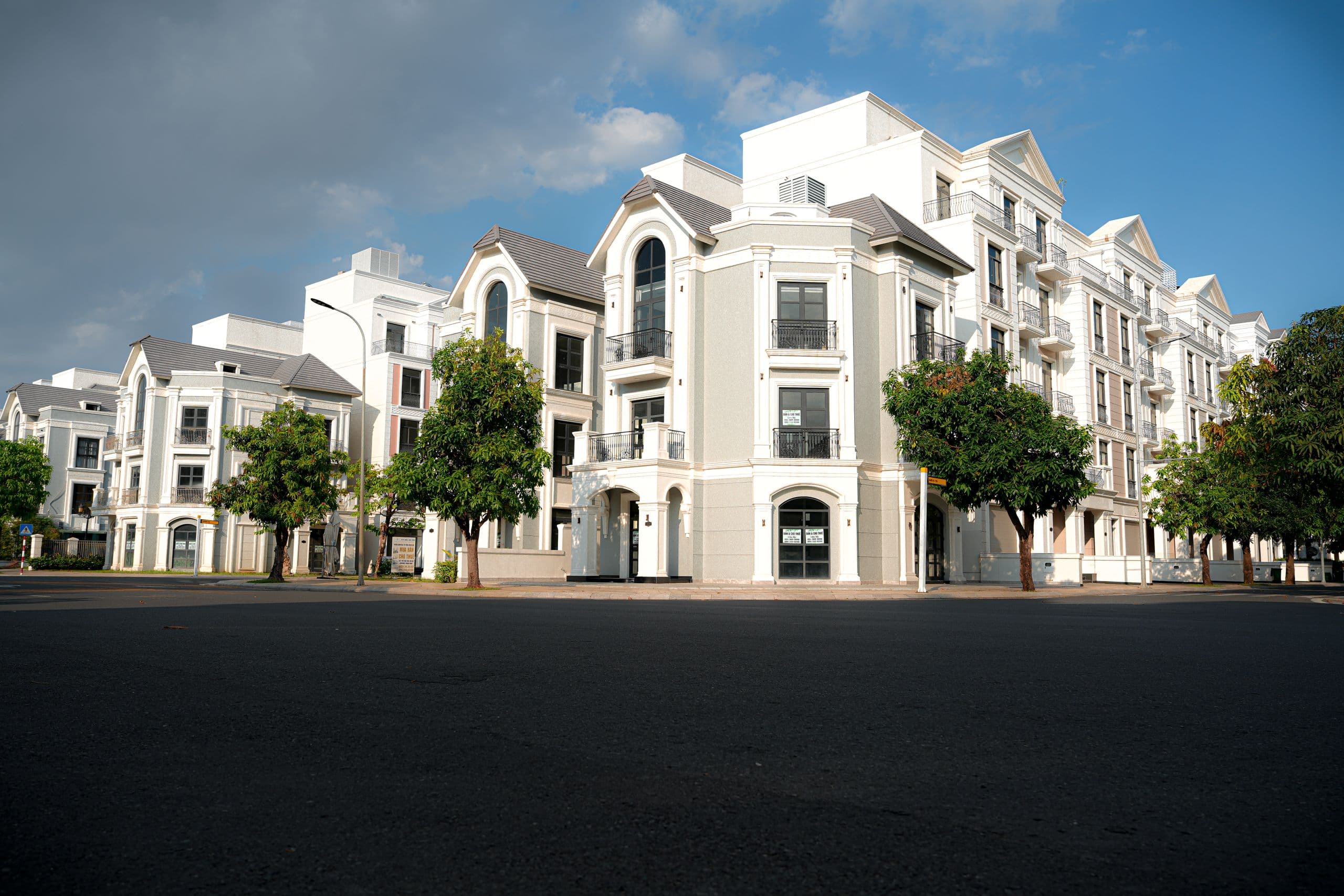


The sinking fund looks nine years ahead, and the forecast is optional
The sinking fund budget must provide for the coming financial year and reserve an amount to meet likely spending for at least nine years after it. In practice that is a ten-year view of what the building will need.
Here is the part that surprises people who have owned in another state: a Queensland body corporate may commission a professional sinking fund forecast, but it does not have to. New South Wales requires a ten-year capital works plan. Queensland does not require the professional report, only the nine-year budgeting horizon.
That matters when you are buying. A scheme with a professionally prepared forecast has usually thought about the roof before the roof starts leaking. A scheme without one may still be well run, but you are relying on the committee's judgement rather than on an engineer's estimate, and you should look harder at the fund balance against the age of the building.
A healthy sinking fund is not a cost, it is protection against a special levy landing on you the year after you buy.
Your share is set by lot entitlements, not by floor area
Contributions are apportioned between lots according to lot entitlements, which are recorded in the community management statement for the scheme.
People assume the split follows the size of the unit, and often it roughly does, but it does not have to. Two apartments of identical size can carry different entitlements, and a townhouse with no access to the pool can still be contributing to maintaining it.
Read the community management statement before you buy, not after. Lot entitlements can be adjusted, but the process is formal and it is not quick.



What an investor can actually deduct, which most guides get wrong
This is where a lot of published advice is simply incorrect, and it is worth being precise because the amounts are not small.
Regular contributions to the administrative fund are deductible in the year you incur them. So are regular contributions to a general purpose sinking fund, the ordinary kind that covers a range of unspecified future expenses such as repainting common property or replacing common fixtures and fittings. The ATO treats both as payment for services the body corporate provides, which is why they are an immediate deduction.
What is not immediately deductible is a special levy raised to fund a specified capital improvement. That treatment does not change if the levy is paid into a special purpose fund or collected as a special contribution to the general purpose sinking fund. It is the purpose that decides it, not the account it lands in.
So the common line that sinking fund contributions are not deductible is wrong, and it costs investors real money at tax time. Ordinary sinking fund contributions are deductible. Special levies for a nominated capital project are not.
A special levy is not lost, though. Where it funds construction, it can qualify as a capital works deduction at 2.5% a year instead, which is a slower claim rather than no claim.
What the fees do not cover
Council rates and water charges for your own lot are yours, not the body corporate's. So is everything inside your own walls: repairs, appliances, floor coverings and any improvement you make.
Building insurance for the common property and the structure is usually a body corporate expense and sits in the administrative fund budget. Your contents, and landlord insurance covering your tenancy risk, are separate and are yours to arrange.
This trips up new investors who assume the body corporate insurance covers a tenant damaging their kitchen. It does not.
Common questions
Two separate funds. The administrative fund covers recurrent running costs: body corporate management fees, common area electricity, cleaning, gardening, insurance premiums and routine maintenance of common property. The sinking fund covers major capital spending such as repainting, roof replacement or lift replacement. A Queensland body corporate must have both, and money cannot be moved between them. Both budgets are set each financial year and approved at the annual general meeting.
Regular contributions to the administrative fund are deductible in the year incurred, and so are regular contributions to a general purpose sinking fund. A special levy raised to fund a specified capital improvement is not immediately deductible, whether it is paid into a special purpose fund or as a special contribution to the general fund. Where that special levy funds construction, it may instead qualify as a capital works deduction spread at 2.5% a year. The widely repeated claim that sinking fund contributions are never deductible is incorrect.
By lot entitlements, which are recorded in the scheme's community management statement. They usually track roughly with the size of a lot but they do not have to, so two units of the same size can pay different amounts, and a lot with no access to a shared facility can still contribute to maintaining it. Check the community management statement before you buy, because adjusting entitlements afterwards is a formal process and not a quick one.
No. The sinking fund budget must provide for the coming year and reserve an amount for likely spending for at least nine years after it, but a professional forecast is optional in Queensland. This differs from New South Wales, where a ten-year capital works plan is required. A scheme without a professional forecast is not necessarily badly run, but you are relying on the committee's estimate of what the building will need, so weigh the fund balance against the age of the building before you buy.
No. Contributions are approved at the annual general meeting and owners are liable for their share, whether or not they voted for the budget or use the facilities being maintained. Unpaid contributions can be recovered as a debt and can attract penalty interest where the body corporate has resolved to charge it. If you disagree with how the body corporate is spending money, the route is the meeting and the dispute resolution process, not withholding payment.
Where to next
- Strata or body corporate, and which applies here/strata-vs-body-corporate
- Capital works deductions, where a special levy can land/capital-works-deduction
- Investment property tax deductions/investment-property-tax-deductions
- Rental yield calculator, which takes body corporate as an input/rental-yield-calculator
- Investment property insurance in Queensland/investment-property-insurance-queensland
- Investment property management on the Sunshine Coast/investment-property-management-sunshine-coast
- Land tax on investment property/land-tax-investment-property-queensland
- Stamp duty on investment property/stamp-duty-investment-property-queensland
- Depreciation schedules/investment-property-depreciation-schedule
- Capital gains tax on a rental/capital-gains-tax-investment-property-queensland
- Building and pest inspection cost/building-and-pest-inspection-cost-queensland
General information only. This page doesn't consider your personal circumstances and isn't financial, tax, credit or legal advice, so get licensed advice on your own position. Body corporate arrangements vary by scheme and by the regulation module that applies to it, and the community management statement for a particular scheme governs its lot entitlements. The fund structure, the annual budget cycle, the nine-year sinking fund horizon and apportionment by lot entitlement come from Queensland Government body corporate guidance under the Body Corporate and Community Management Act 1997, read on 3 September 2026. The deductibility treatment of administrative fund contributions, general purpose sinking fund contributions and special levies comes from Australian Taxation Office guidance on body corporate fees and charges for rental properties, read on 3 September 2026. FAA Property Pty Ltd holds QLD OFT real estate licence 4220395. FAA is not a body corporate manager and does not provide body corporate management services. FAA Property earns a commission from builders and developers when a property purchase proceeds. The strategy session itself costs you nothing. Because we're paid by the supply side, you should weigh our recommendations with that in mind. Financial advice and credit sit with other FAA Group companies, which are authorised representatives of Lifespan Financial Planning Pty Ltd, AFSL 229892. FAA doesn't lend money.