
In 2023-24 the median SMSF reported $9,874 in total expenses and $4,553 in operating expenses, on ATO annual return data. The median audit fee was $550 and the supervisory levy is a flat $259. Those medians cover only funds that reported each expense, so read them as a subset.
Last reviewed 12 August 2026.
Where these numbers come from
ASIC's Moneysmart doesn't publish amounts. It sends readers to the ATO instead, in one line: 'The ATO has information about SMSF expenses by fund size.' So that's where this page goes.
Every dollar figure below belongs to a regulator. FAA has none of its own, and none appear here.
Two ATO numbers, measuring different things
Two ATO numbers get quoted as the cost of running a fund. They measure different things. Operating expenses covers four labels on the annual return. They are the approved auditor fee, management and administration expenses, other amounts, and the SMSF supervisory levy. That's what the fund pays to exist. In 2023-24 the average was $7,271 and the median $4,553.
Total expenses adds interest paid within Australia, interest paid overseas, insurance premiums for members, investment expenses and forestry managed investment scheme expenses. In 2023-24 the average was $18,735 and the median $9,874. The ATO rounds those to $18,700 and $9,900 in its own highlight. It puts the average up 4.5% on the year before, and 19.5% on 2019-20. Anyone quoting that average as the cost of running an SMSF is counting loan interest and investment costs. Those have nothing to do with administering the fund.
Compare each average with the median beside it. That gap is arithmetic on the ATO's own two figures. The ATO's tables by fund size, further down, show what size does to a bill.
- $4,553
- Median operating expenses, 2023-24
- Source: ATO statistics
- $9,874
- Median total expenses, 2023-24
- Source: ATO statistics
- $550
- Median approved auditor fee, 2023-24
- Source: ATO statistics
- $259
- Supervisory levy, flat in every band
- Source: ATO statistics
The caveat that travels with every figure here
Now the caveat. It decides how far any of this can be pushed. The ATO works out those averages and medians using only the funds that report an expense at the relevant label. So each figure covers a subset of the population. It can't be set against an average or a median worked out across all funds. Where all expenses are included, the whole population is in.
So read the median audit fee as the median among funds that reported an audit fee. It's the ATO's own caveat. It travels with every figure here.


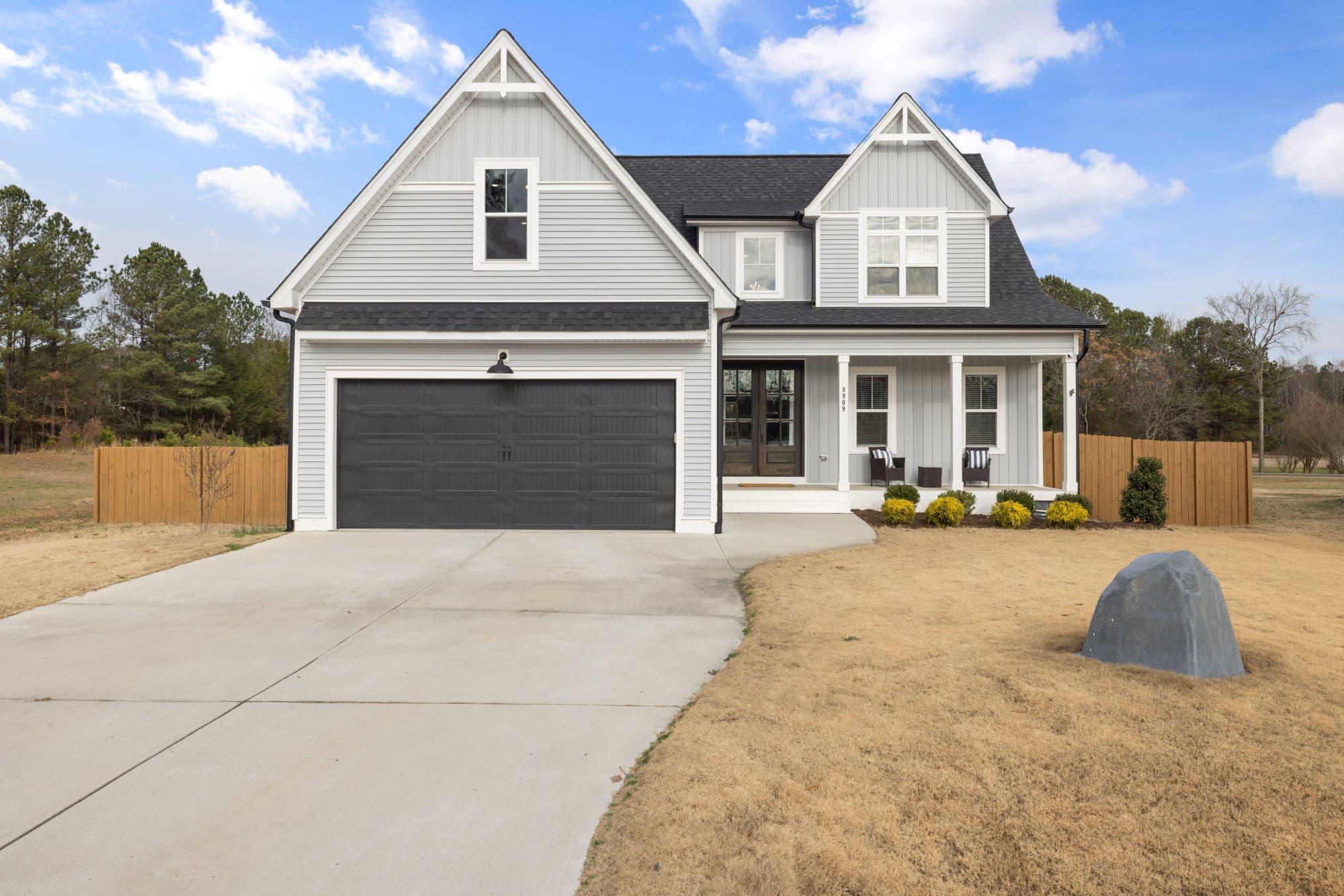
What the borrowing change does to the bill
One more thing shapes the bill for anyone buying now. An LRBA entered into on or after 10 August 2026 to purchase real property can only be used to acquire business real property. A fund can still buy residential investment property outright with its own money.
Interest paid within Australia is the largest single average expense line the ATO records, at $22,642 in 2023-24. The ATO puts that up 15% in the year, from $19,700 to $22,600.
Put those two together. For a fund making a new residential purchase after that date, loan costs don't arise. The purchase has to be funded outright. In FAA's reading, that fund's yearly bill looks more like the operating expense figure than the total. That's FAA's conclusion from the two facts above. The ATO and ASIC don't put it that way, and no dollar saving comes with it.
A cost figure without a publisher or a year can't be checked
The ATO's annual statistical overview names its publisher and states its method. The latest edition covers 2023-24. It counts what funds reported on their annual returns, so it's a count rather than an estimate. A figure that arrives with neither a publisher nor a year can't be checked against anything.
A single national figure also can't tell you whether it describes a fund like yours. The ATO's own bands for 2023-24 answer that better than any single number does. Find the one your fund sits in, and read the median beside it.
FAA publishes the regulator's figures with the source and the date attached. FAA also models what a specific property would cost to hold, so you have a number for your own purchase. That model looks forward at what a property would take to hold. It isn't evidence of an asset's market value for the fund's accounts.
| Fund assets | Median total expenses |
|---|---|
| $200,000 to $500,000 | $7,388 |
| $500,000 to $1 million | $9,985 |
| $1 million to $2 million | $11,698 |
| $2 million to $5 million | $16,132 |
Source: ATO statistics
A small fund pays the same fixed bills as a large one
The supervisory levy is a flat $259. It sits at $259 in every fund size band, from under $50,000 to over $10 million, and in every year from 2019-20 to 2023-24. The audit is compulsory every year.
The ATO shows what that does. In the $0 to $50,000 asset range the average total expense ratio was 17.1%. Average expenses were $4,100 and median expenses $2,300. In the over $10 million range the ratio was 0.5%. Average expenses were $98,900 and median expenses $41,300.
ASIC's Moneysmart publishes a case study where the answer comes out as a no. Kyle had a property portfolio worth $1 million, investment loans of $800,000 and $200,000 in super, on Moneysmart's figures. He held no other investments. After advice from a registered financial adviser, he decided an SMSF wasn't right for him. Buying property through an SMSF would further increase his debt and reduce the diversification of his assets. The cost, time and responsibility of running a fund counted too.
FAA can't tell you whether a balance is big enough, and won't. That's a question for someone licensed to answer it. FAA's part is putting the holding cost of a specific property in front of you, and introducing you to specialist SMSF accountants and solicitors.
The money spent getting in never comes back as a deduction
The ATO treats an expense incurred in establishing or making lasting changes to a super fund's structure or function as capital in nature. So the general deduction provision doesn't apply. Its own example of a capital expense is the cost of establishing an SMSF. Trust deed costs are generally not deductible for the same reason. That covers the cost to establish a trust, execute a new deed or significantly alter the scope of the trust's activities.
Running costs are treated differently. The ATO says operating expenses are mostly deductible under the general deduction provision. Its examples are management and administration fees, audit fees and the ASIC annual fee. The levy is deductible under section 25-5 of the ITAA 1997.
The corporate trustee shows both answers at once. ASIC charges an initial registration fee and an annual fee. The annual fee is deductible by the fund. The fees to set the company up are capital, which the ATO shows beside $300 of legal fees to amend a trust deed in its own worked example. At 30 June 2025, 72% of all SMSFs had a corporate trustee. Of funds registered during 2024-25, 89.2% were set up with one, so this applies to most funds.
No ASIC dollar amount appears on this page. FAA couldn't read the current amount off ASIC's own fee page, and a figure that can't be checked against its source doesn't get published here. The gap is deliberate, so nobody fills it in later with a number from somewhere else. Your fund's accountant has the current schedule.
Queensland transfer duty lands on the fund at the full rate
Queensland Revenue Office says the home concession rates are for buying a home to live in, and lists four home concessions. A fund's residential property can't be lived in or rented by a fund member or a related party of a member. So the concession that lowers an owner-occupier's bill looks out of reach for a fund by definition. That step is an inference across two sources, not a QRO statement about funds. Treat it as a question for a Queensland solicitor.
QRO publishes the arithmetic for an investment purchase. Take an agreement to buy a house with a dutiable value of $850,000 that doesn't qualify for a home concession, because the house will be an investment property. Duty is assessed at $17,325 for the first $540,000, plus $13,950 on the $310,000 balance. That gives transfer duty of $31,275. It's the state revenue office's own calculation, published 25 June 2026. It dwarfs a year of running costs.
This isn't the first time FAA has shown this arithmetic. FAA has already published a worked Queensland duty calculation on an investment purchase, with the working set out. What's new here is whose example it is: this one is QRO's own, and the SMSF consequence above it is the part FAA hasn't published before. The full rate table sits on FAA's Queensland investment property page. FAA doesn't assess duty and doesn't give tax advice. A Queensland solicitor should confirm the concession position for a fund before you rely on it.



A house can't pay a pension
Once a member starts a pension, the fund has to pay a minimum amount in cash at least once a year. For 2023-24 onwards the ATO sets that minimum as a percentage of the account balance. It runs 4.0% under 65, 5.0% at 65 to 74, 6.0% at 75 to 79 and 7.0% at 80 to 84. Then 9.0% at 85 to 89, 11.0% at 90 to 94 and 14.0% at 95 or more. The ATO lists a member starting a pension as an event that should prompt a strategy review. The reason sits in the same line: the fund needs to be able to meet those payments. Since 1 July 2017 partial commutation payments don't count towards the minimum.
Miss the minimum and the super income stream is taken to have ceased at the start of the income year for income tax purposes. Payments for that year and later years aren't treated as super income stream benefits. The fund can't claim exempt current pension income for that year or subsequent years. There are transfer balance account consequences too.
Selling part of the property isn't a way out. The trustee has to make sure there are sufficient assets to pay the minimum before partially commuting a pension.
FAA models rent and holding costs so the cash side of a property is visible before anybody signs. Whether the fund can meet its pension obligations is a question for the accountant and a licensed adviser. FAA makes the introduction, not the call.
The exit gets forced by a death, not a decision
Moneysmart says an SMSF may bear additional costs if there are significant changes to the investments held, or the arrangement is wound up. Its example is a fund needing to sell a property to fund a large withdrawal, such as a death benefit. The ATO builds the same risk into the investment strategy rules. They require the trustee to consider the liquidity of the fund's assets, meaning how easily they can be converted to cash to meet fund expenses and pay member benefits.
A house is the slowest thing a fund can own. Where most of the fund's savings sit in one asset, the ATO says the strategy should document that the trustee considered the risks of a lack of diversification. It should also document how the investment will still meet the fund's objectives, including investment returns and cash flow requirements. The ATO adds that concentration risk is higher where a fund has borrowed. That could trigger a forced asset sale if loan rules are breached.
Where FAA is the managing agent, rent collection and arrears are watched as part of the job. Management runs on the Sunshine Coast, from the Maroochydore office. The strategy document and the liquidity call belong to the trustee and their adviser.
A compliance penalty comes out of the trustee's own pocket
Administrative penalties levied on a trustee under super laws are incurred by the trustee of the fund, or by the director of the corporate trustee.
The ATO says they're not deductible to the fund. They must not be paid or reimbursed from the assets of the SMSF. It's a cost that appears on no fee schedule. A deduction softens ordinary operating expenses. It does nothing for a penalty.
FAA doesn't run funds and doesn't advise on fund compliance. No FAA entity holds its own AFSL. Introductions to specialist SMSF accountants and solicitors are part of the strategy call.
Who publishes these figures, and who pays FAA
FAA Property Pty Ltd is a licensed Queensland real estate agency, OFT licence 4220395, current to 5 June 2027. One office, at Suite 3-7, Level 5, Tower 2, 55 Plaza Parade, Maroochydore QLD 4558. Phone (07) 5327 3469. No branch anywhere else.
No FAA figure appears on this page. Every dollar amount belongs to the ATO, ASIC Moneysmart or the Queensland Revenue Office. Each one is reproduced as that source states it, and carries the source and its date.
FAA's disclosure, in its published wording:
FAA Property earns a commission from builders and developers when a property purchase proceeds. The strategy session itself costs you nothing. Because we're paid by the supply side, you should weigh our recommendations with that in mind.
No FAA entity holds its own AFSL. Financial advice sits with other FAA Group companies, which are corporate authorised representatives of Lifespan Financial Planning Pty Ltd, AFSL 229892. FAA doesn't lend money and doesn't value property. FAA sources new-build, house-and-land and off-market residential investment property across South East Queensland, and manages residential rental property on the Sunshine Coast.
You've now got the population's numbers and none of your own. The fund's numbers belong to its accountant and a licensed adviser. FAA's part is smaller and easier to describe. Model what a particular Queensland property would cost to hold. Source new-build, house-and-land and off-market residential stock across South East Queensland, and manage it on the Sunshine Coast if that's where it sits. Book an SMSF Property Strategy Call and the session costs you nothing, because builders and developers pay FAA when a purchase proceeds. Weigh what you read here with that in mind.
Common questions
On ATO annual return data for 2023-24, average operating expenses were $7,271 and the median was $4,553. Operating expenses is the running cost of the fund itself: the approved auditor fee, management and administration expenses, other amounts, and the supervisory levy. Median management and administration expenses alone were $3,309, with an average of $5,164. One caveat travels with all of it. The ATO calculates these using only the funds that reported an expense at the relevant label. So each figure describes a subset rather than every fund. The 2023-24 edition is the latest. Its workbook was last modified 9 December 2025, so it describes that year and not today.
In 2023-24 the average auditor fee was $651 and the median was $550, on the ATO's annual return data. Just over half of all audit fees, 52.1%, sat between $500 and $999. The median has been $550 in every year from 2019-20 to 2023-24. Those figures come from the ATO's statistical overview of SMSFs, 2023-24 edition, in a workbook last modified 9 December 2025. That median is the median among funds that reported an auditor fee, not among all funds. The audit isn't optional. An approved SMSF auditor has to be appointed each income year, no later than 45 days before the annual return is due. An audit is required even where no contributions or payments were made.
It's a flat $259 paid to the ATO. The same $259 shows up as both the average and the median in the ATO's expense tables. It's there in every year from 2019-20 to 2023-24, and in every fund size band from under $50,000 to over $10 million. One line on the bill is identical whether the fund sits in the ATO's smallest asset band or its largest. That's why it stings a small fund and disappears in a large one. The levy is deductible under section 25-5 of the ITAA 1997. What a newly registered fund pays in its first year isn't published here. FAA couldn't confirm that amount against the ATO's own page, and an unconfirmed number doesn't go on this page.
No. The ATO says an expense incurred in establishing or making lasting changes to a super fund's structure or function is capital in nature. It isn't deductible under the general deduction provision. The ATO gives the costs of establishing an SMSF as its example. ASIC fees incurred setting up a corporate trustee are capital too. The ATO shows that next to $300 of legal fees to amend a trust deed in its own example. Ongoing costs are the other way around. Management and administration fees, audit fees and the ASIC annual fee are mostly deductible under the general deduction provision. Your fund's accountant applies this to your fund.
That's the likely position, and it's worth confirming with a Queensland solicitor. QRO's home concession rates are for buying a home to live in. A fund's residential property can't be lived in or rented by a fund member or a related party. QRO publishes its own calculation example for an investment purchase. Take a house with a dutiable value of $850,000 that doesn't qualify for a home concession, because it'll be an investment property. Duty is $17,325 for the first $540,000, plus $13,950 on the $310,000 balance, giving $31,275. The rate table behind it was last updated 25 June 2026.
No page can set that number for your fund, and this one won't try. What the ATO does say is that the fund's investment strategy has to consider the liquidity of its assets. That means how easily they convert to cash to meet fund expenses and pay member benefits. Where most of the savings sit in one asset, the strategy should also document that the trustee considered the risks of a lack of diversification. It should document how the investment still meets the fund's objectives too, including returns and cash flow. Moneysmart adds the event nobody plans for: a fund needing to sell a property to fund a large withdrawal, such as a death benefit. That's a conversation for your accountant and a licensed adviser.
Less than people expect on the cost side. On the ATO's 2023-24 figures, funds in retirement phase incurred lower average total expenses, $17,233, than funds solely in accumulation phase, $20,059. What does change is the cash obligation. The ATO lists a member starting a pension as an event that should prompt a strategy review. The fund needs to be able to meet minimum pension payments. Those minimums start at 4.0% of the account balance under 65 and rise with age, up to 14.0% at 95 or more, for 2023-24 onwards. Miss one and the fund can lose exempt current pension income for that year and later years. Read those expense figures with the ATO's subset caveat attached.
Where to next
- SMSF property investment in Queensland/smsf-property-investment-queensland
- Buying property with an SMSF: the money rules/buying-property-with-smsf
- The six ATO restrictions, read for property/smsf-property-rules
- What the ATO requires when a fund values property/smsf-property-valuation
- Queensland transfer duty and land tax on an investment purchase/investment-property-queensland
- Model what a property costs to hold/investment-property-calculator
- SMSF Borrowing Rules After 10 August 2026/smsf-residential-property-borrowing-ban
- SMSF Commercial Property Rules, August 2026/smsf-commercial-property
- SMSF Property Investment, Sunshine Coast/smsf-property-investment-sunshine-coast
General information only. This page doesn't consider your circumstances and isn't personal financial, tax or SMSF compliance advice. Get licensed financial, legal and tax advice before acting on it. FAA Property Pty Ltd is a licensed Queensland real estate agency, OFT licence 4220395. Financial advice sits with other FAA Group companies, which are corporate authorised representatives of Lifespan Financial Planning Pty Ltd, AFSL 229892. FAA doesn't lend money and doesn't value property. Every dollar figure here is a regulator's, reproduced as that source states it and dated; none is FAA's own, and none is an estimate of what your fund would pay.