
The main property investment strategies are capital growth, cash flow, negative gearing, buy and hold, renovating to add value, and rentvesting. Two of those changed on 26 June 2026, when the Treasury Laws Amendment (Tax Reform No. 1) Act 2026 got Royal Assent. From 1 July 2027 it limits negative gearing on residential property to new builds.
Last reviewed 10 September 2026.
The strategies most guides list, in plain words
Australian property guides mostly list the same handful. Here's what each one means, without the sales pitch.
No strategy on that list is right for everyone. And nothing in the vocabulary is new. What's new is the tax law sitting underneath two of them.
Capital growth. You hold the property hoping its value rises.
Cash flow, also called positive gearing. The rent coming in is higher than the costs going out.
Negative gearing. The costs run higher than the rent, so the property makes a loss.
Buy and hold. You keep it long term.
Renovate or add value. You improve it to lift the equity or the rent.
Rentvesting. You rent where you want to live and own an investment somewhere else.
One Act in June 2026 changed the tax under two of them
The Treasury Laws Amendment (Tax Reform No. 1) Act 2026 got Royal Assent on 26 June 2026. It sits on the Federal Register of Legislation as No. 49, 2026. Two schedules matter for a strategy comparison.
Schedule 2 limits negative gearing on residential property to new builds. Treasury's second reading speech puts the start at the 2027-28 income year, which begins 1 July 2027.
Schedule 1 is the one most strategy lists miss, because it moves the arithmetic under every capital growth plan. Treasury describes it as cost base indexation and a 30 per cent minimum tax rate on capital gains accruing from 1 July 2027, with the 50 per cent CGT discount applying to gains accruing up until then. Those are Treasury's words, not ours.
The Act's CGT change reaches past individuals. Which category you sit in is a question for your accountant, and we're not going to answer it for you.
Two things stayed put. Treasury says commercial property and other asset classes such as shares remain subject to existing arrangements. Treasury also says widely held trusts and superannuation funds, including SMSFs, are excluded from the negative gearing limits.
Nothing about the current financial year changes either. The limits start in 2027-28.
The full detail of the Act lives on our negative gearing page. This page is about what it does to a strategy comparison.


Your purchase date is now part of the comparison
Plenty of strategy guides predate June 2026. Check the date on anything you read about this, including this page.
One timestamp now sorts residential investors into different answers, per Treasury's second reading speech.
The change quarantines losses rather than wiping them out. Treasury says excess losses can be carried forward to offset residential property income in future years, so investors can continue to claim a deduction in the future.
Run My Investment Property Numbers on a specific property before you compare strategies in the abstract. A strategy is only as good as the figures under it.
Bought before 7:30pm AEST on 12 May 2026. Treasury says properties held at the announcement will be allowed to be negatively geared in future years until sold.
Bought after that time. From the 2027-28 income year, Treasury says losses related to existing residential investment properties will only be deductible against other income from residential properties.
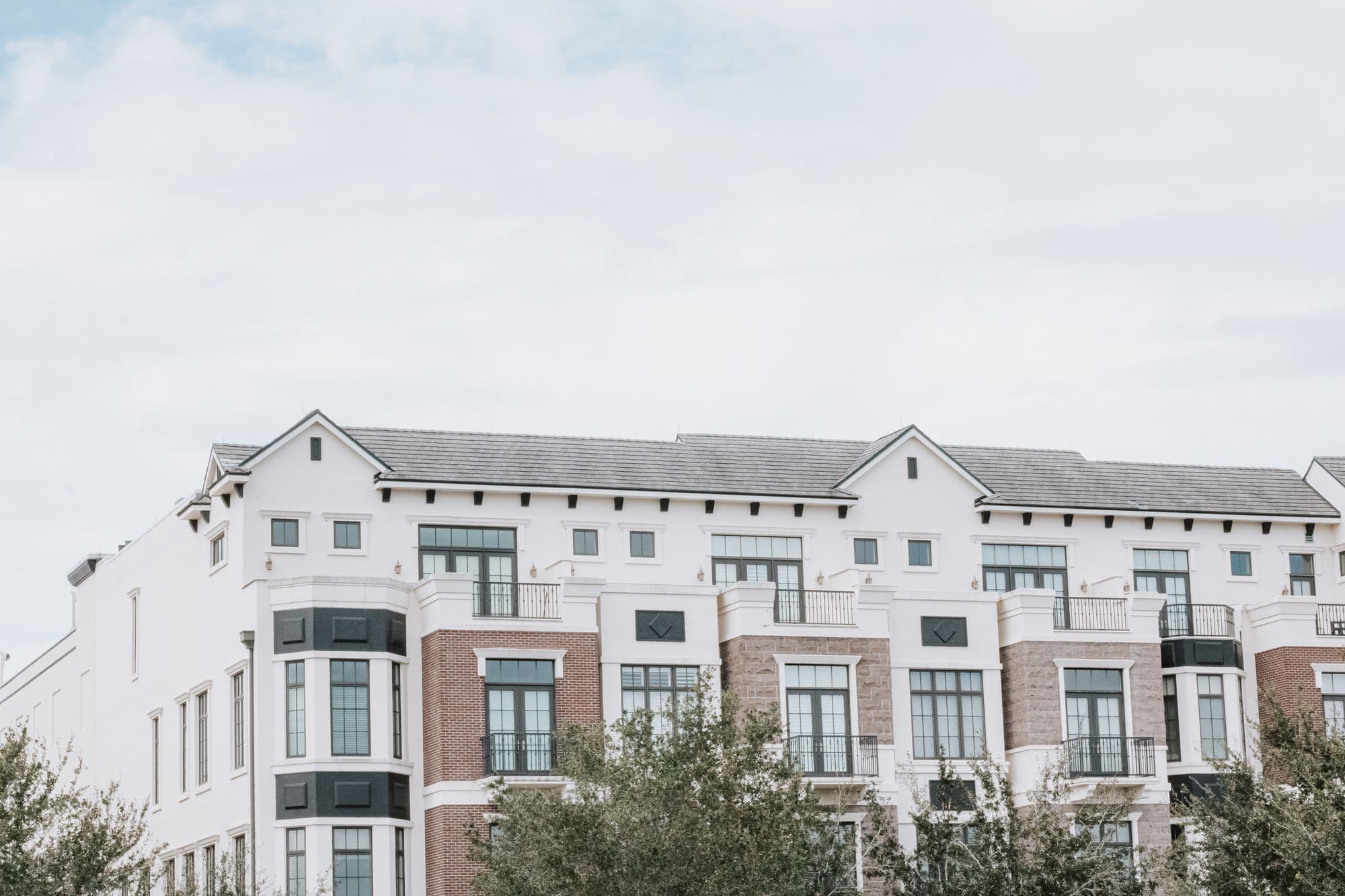
A new build. Treasury says investors can continue to use negative gearing on new builds. What counts as a new build isn't settled. See the next section.
New builds are the carve-out, and they're what we get paid on
Treasury says investors can continue to use negative gearing on new builds, so the benefits are directed to investments that support growth in Australia's housing stock. That's the one category the rule carves out.
Now the part you should know before you read another word.
FAA Property earns a commission from builders and developers when a property purchase proceeds. The strategy session itself costs you nothing. Because we're paid by the supply side, you should weigh our recommendations with that in mind.
New builds are the category the law carves out. New builds are also what we're paid on. Those two facts sit right next to each other, and you're better off reading the rest of this page knowing it.
What we won't do is tell you a new build is the right answer for your situation. That's a personal tax question, and we aren't licensed to answer it.
Nobody can confirm today exactly which properties will meet the definition either. Treasury opened a consultation called Capital Gains Tax and Negative Gearing, Tranche 2 Legislation, on 4 August 2026, and it closed on 21 August 2026. Its draft materials define a new residential dwelling as one that genuinely adds to housing supply, acquired within 24 months of a certificate of occupancy being issued. Until that is legislated, treat any confident answer about a specific property with suspicion. Ours included.
The 2% rule, run against a real Queensland number
The 2% rule keeps showing up in the questions people ask alongside this one, so it's worth doing the sum instead of repeating it.
The rule says a property's gross monthly rent should be at least 2% of its purchase price. Every source we found for it is United States property-investing content. Imported rule of thumb. Treat it that way.
Here's what it asks for against an Australian figure. The ABS Lending Indicators release for the March quarter 2026 puts the average investor loan size in Queensland at $711,000. Two per cent of that is $14,220 a month. Over a year that's $170,640, which works out at roughly $3,280 a week in rent.
That sum is illustrative, and it uses a loan size rather than a purchase price. Look up your own suburb before you draw a conclusion from it. The Residential Tenancies Authority works out Queensland median weekly rents by analysing new rental bond lodgements each quarter, and publishes them by postcode, suburb, local government area and whole of Queensland. That's the number to compare against.
Same ABS release, for scale: 57,342 new investor loan commitments for dwellings in the March quarter 2026, seasonally adjusted, down 5.3% on the quarter and up 18.8% year on year. The value of those commitments was $41.5 billion, down 3.0% on the quarter and up 25.3% year on year.


What FAA does with a strategy, and what we won't touch
FAA Property is a licensed Queensland real estate agency. OFT licence 4220395, expiring 5 June 2027. That licence permits us to act for buyers. The Property Occupations Act 2014 (Qld) section 26 covers buying and negotiating as agent for others for reward, and Queensland has no separate buyer's-agent licence class.
What we do. We source new-build, house-and-land and off-market investment property across South East Queensland, plan the strategy around it, and manage it afterwards. We manage residential investment property across the Sunshine Coast from one office in Maroochydore, with rentals on the books in Maroochydore, Buderim, Sippy Downs and Nirimba as at 5 August 2026. So what we source, we also look after.
FAA Property is the real estate arm of FAA Group, which also provides finance, accounting, taxation, cash-flow management, retirement planning and estate planning. Financial advice and credit sit with other FAA Group companies, not with FAA Property.
What we don't do. Personal financial, tax or SMSF advice. Get that from someone licensed to give it before you act on anything you've read here.
Suite 3-7, Level 5, Tower 2, 55 Plaza Parade, Maroochydore QLD 4558. Phone (07) 5327 3469. Email property@faa.net.au.
Last reviewed: 10 September 2026. Treasury's consultation on the new-build definition closed on 21 August 2026, so this page gets checked again when the final definition is legislated.
Common questions
It's a rule of thumb saying a property's gross monthly rent should be at least 2% of the purchase price. Every source we found for it is United States property-investing content, so it doesn't travel well. Run it against an Australian figure and you'll see why. The ABS Lending Indicators release for the March quarter 2026 puts the average Queensland investor loan at $711,000. Two per cent is $14,220 a month, or roughly $3,280 a week. That sum is illustrative and uses a loan size, not a price. Check the RTA median for your own suburb before you decide anything.
It's a general investing rule of thumb, not an Australian property rule. We haven't found a source that applies it to Queensland residential property, so we won't restate it as though it does. For a property purchase, the rules that actually bind you are in the Treasury Laws Amendment (Tax Reform No. 1) Act 2026 and in what a lender will approve. Ask a licensed adviser about the second one.
Another imported rule of thumb from general investing content. No Australian property source turned up for it when we checked on 5 August 2026. Any rule built around a fixed return figure is one to be careful with. Nobody can promise you a return on a Queensland property, and we won't.
A general investing rule of thumb, and not one about Australian residential property. It gets asked alongside property searches because people are trying to work out how much to put where. That's a question for a licensed financial adviser, not for a real estate agency. We source and manage property. We don't advise on portfolios.
There's no honest answer that names a number, and anyone giving you one is guessing. What we can tell you is what changed. Treasury says the 50 per cent CGT discount applies to gains accruing up until 1 July 2027, with cost base indexation and a 30 per cent minimum tax rate on capital gains accruing after that. So the after-tax maths on a long hold looks different now. Get advice on your own position before you plan around a number.
No. A buyer's agent acts exclusively for the buyer and is paid by the buyer. FAA sources investment property, plans the strategy around it and manages it long term, and is paid by builders and developers on purchase. If you want someone who acts only for you with no supply-side income, engage a licensed buyer's agent.
Where to next
- What the 2027 negative gearing changes actually say/negative-gearing-changes-explained
- Talk to a property investment strategist in Queensland/property-investment-strategist-queensland
- Run the numbers on an investment property/investment-property-calculator
- New build investment property in Queensland/new-build-investment-property-queensland
- House and land investment packages/house-and-land-investment-packages-queensland
- SMSF property investment in Queensland/smsf-property-investment-queensland
- Using equity to buy an investment property/use-equity-to-buy-investment-property
- Buying your first investment property/first-investment-property-queensland
- Building a property portfolio in Queensland/build-property-portfolio-queensland
- Current investment property opportunities/current-investment-property-opportunities
- What negative gearing is, in plain terms/blog/what-is-negative-gearing-in-australia
- Smart Property Hub/smart-property-hub
General information only, current at 5 August 2026. It doesn't take your circumstances into account and it isn't financial, tax or legal advice. FAA Property is a licensed Queensland real estate agency (OFT licence 4220395) and doesn't give personal financial, tax or SMSF advice. Financial advice is referred to FAA Group companies that are authorised representatives of Lifespan Financial Planning Pty Ltd, AFSL 229892. FAA Property earns a commission from builders and developers when a property purchase proceeds. Get licensed financial, legal and tax advice before you act. The tax rules described here were subject to a Treasury consultation that closed on 21 August 2026, and the new-build definition remains draft until it is legislated.